
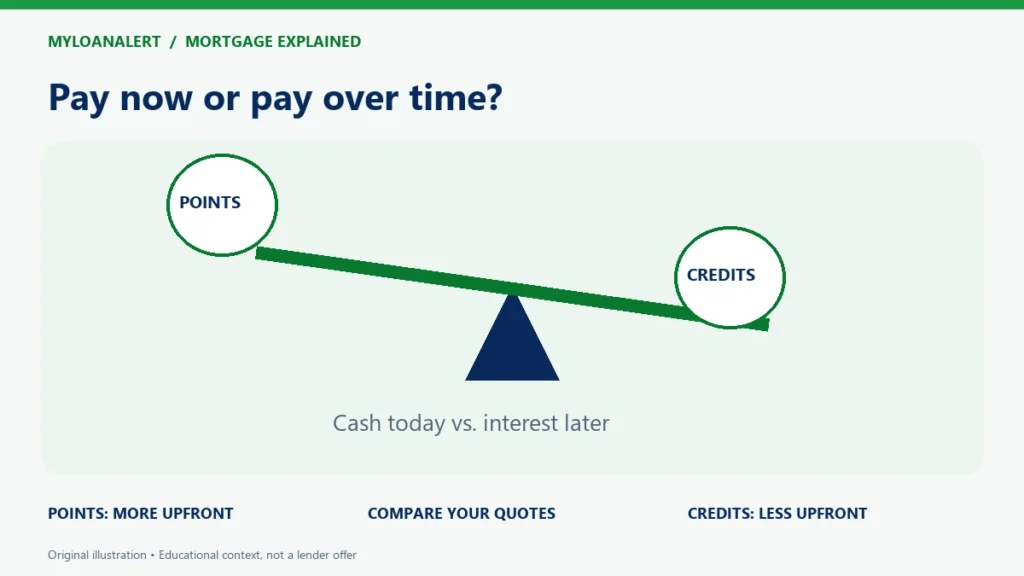
The short answerDiscount points pay for a lower rate upfront. Lender credits typically offset closing costs in exchange for a higher rate. Compare actual quotes over several possible time frames to see which tradeoff fits your plans.
The loan officer asks whether you want to buy down the rate. It sounds like a simple yes-or-no question. It is really a question about cash today and costs later. A lower rate can be valuable. So can keeping money available for moving, repairs or an emergency. You need both sides of the offer before making the trade.
What does one point mean?
One discount point costs 1% of the loan amount. On a $300,000 mortgage, that is $3,000. The rate reduction is not a fixed amount across lenders. Ask what rate you would receive without points, then compare it with the quoted rate after paying them.
Do not confuse discount points with every fee a lender charges. Have the lender identify the charge and the rate change attached to it.
How do lender credits work?
A lender credit helps cover closing costs. It can make the initial cash requirement easier to manage, but a higher rate may increase the cost of keeping the loan. Compare the written credit and rate together.
Ask for options with no points or credits as well as the offered combination. That gives you a useful reference instead of comparing two packages with hidden differences.
Test more than one break-even
A simple payment break-even divides the extra upfront cost by the monthly payment reduction. It tells you when those smaller payments recover the initial difference.
A fuller comparison also looks at interest, fees and the balance left on each loan. Those results can differ from the quick payment calculation. Check the shortest, longest and most likely time you might keep the mortgage.
Keep enough cash for the rest of the move
Do not decide using the loan math alone. Write down the money you would have left after closing under each option. Then consider immediate repairs, moving expenses and your emergency reserve. An attractive long-term estimate does not make an uncomfortable cash position disappear.
When comparing different lenders, request the same loan structure and identify every credit. Revisit the calculation if the rate or fees change.
A simple example
In a simplified example, points cost an extra $3,000 and reduce the payment by $75 a month. The payment break-even is 40 months. Keeping the loan for two years gives only $1,800 in payment reductions. Keeping it longer could change the picture, but debt balances and other fees still need checking.
Illustrative assumptions, not current lender pricing or promised savings.
Questions people ask
Does one point always lower the rate by the same amount?
No. Use the actual rate and point combinations your lender offers. Do not assume a standard reduction.
Are lender credits free money?
A credit reduces upfront costs, but may come with a higher rate. Ask the lender to show the alternative without the credit.
Try this with your numbers
Use your lender’s quote and your own assumptions. No signup is needed for the calculator.
See the free account · Compare more with Plus — $30 USD/year
New signup is coming soon. Existing accounts can save an offer or goal. Paid checkout is coming soon. Automatic monitoring and email alerts are not active yet.
Sources and further reading
Educational information and estimates only. Confirm loan terms and eligibility with your lender or servicer. MyLoanAlert does not originate or approve loans. Read our disclosures.