
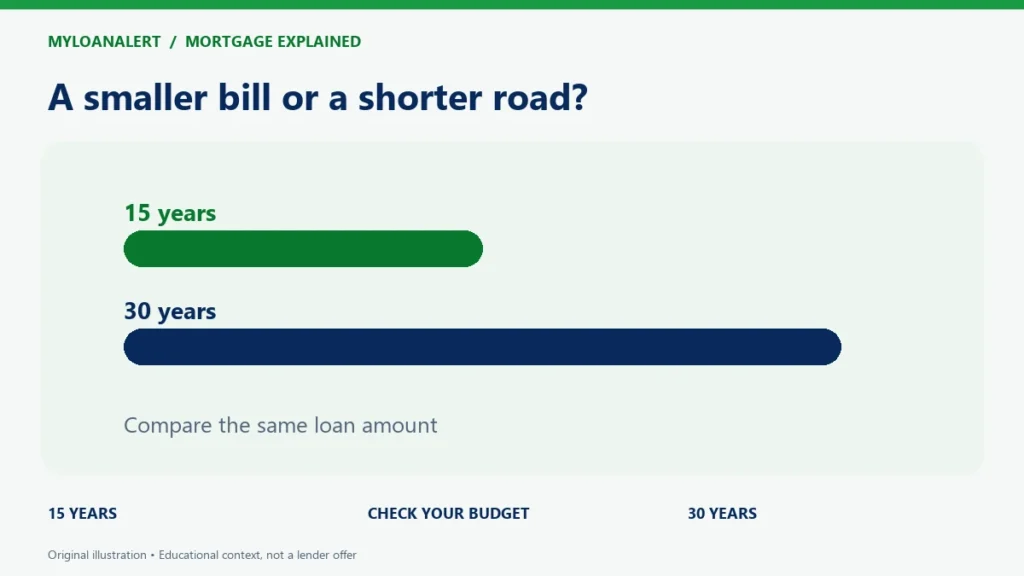
The short answerA shorter mortgage term usually requires a higher payment and can reduce interest costs. A longer term can provide a smaller required payment and more monthly flexibility. Compare your actual quotes and the debt remaining at the same end date, then check your household budget.
Paying off a mortgage sooner sounds appealing. So does having room in your budget when a car breaks down or your income changes. Neither goal is foolish. The right comparison puts the required payments next to the long-term costs, instead of using one number to choose for you.
Use the same amount borrowed
Start with lender quotes for the same loan amount. Enter each rate, term and fee separately. If one quote includes points, do not quietly leave that extra cost out.
First compare the required principal-and-interest payments. Then add taxes, insurance and other housing costs to understand whether the full monthly commitment is comfortable.
Compare debt at the same date
Look at both loans after five or ten years as well as through payoff. A payment difference does not tell you how much debt each loan has left.
If one loan ends sooner, separate its completed borrowing costs from the other loan’s ongoing balance. MyLoanAlert’s term calculator shows these measures so you can see the tradeoff rather than assuming the lower bill is the cheaper loan.
Test extra payments as a separate plan
You might choose a longer term and intend to pay extra. Model that plan in the extra-payment calculator. Also run the case where you stop the extras.
A voluntary extra payment and a required higher payment are different commitments. If you need flexibility, the case without extras deserves a place in your decision.
Ask what changes if life changes
Write down the payment you could maintain during a difficult month, not just a comfortable one. Keep other goals in the picture: emergency savings, retirement contributions and expensive debts may compete for the same dollars.
Check the lender’s rules for extra principal and any prepayment penalty. Do not assume you can easily refinance later to fix a payment that is too high now.
A simple example
Suppose the shorter-term quote requires $600 more each month. Before comparing lifetime interest, put that $600 into your current budget. Would choosing it mean giving up your repair reserve? If so, model a longer loan with a smaller optional extra payment as another scenario.
Illustrative assumptions, not current lender pricing or promised savings.
Questions people ask
Does a shorter term always have a lower rate?
Do not assume it. Compare the actual term-and-rate quotes available to you, along with any points or fees.
Is a 30-year loan with extras the same as a 15-year loan?
Only matching rates, amounts, payment amounts and timing would produce matching repayment paths. Real quotes and voluntary payment habits may differ.
Try this with your numbers
Use your lender’s quote and your own assumptions. No signup is needed for the calculator.
See the free account · Compare more with Plus — $30 USD/year
New signup is coming soon. Existing accounts can save an offer or goal. Paid checkout is coming soon. Automatic monitoring and email alerts are not active yet.
Sources and further reading
Educational information and estimates only. Confirm loan terms and eligibility with your lender or servicer. MyLoanAlert does not originate or approve loans. Read our disclosures.