
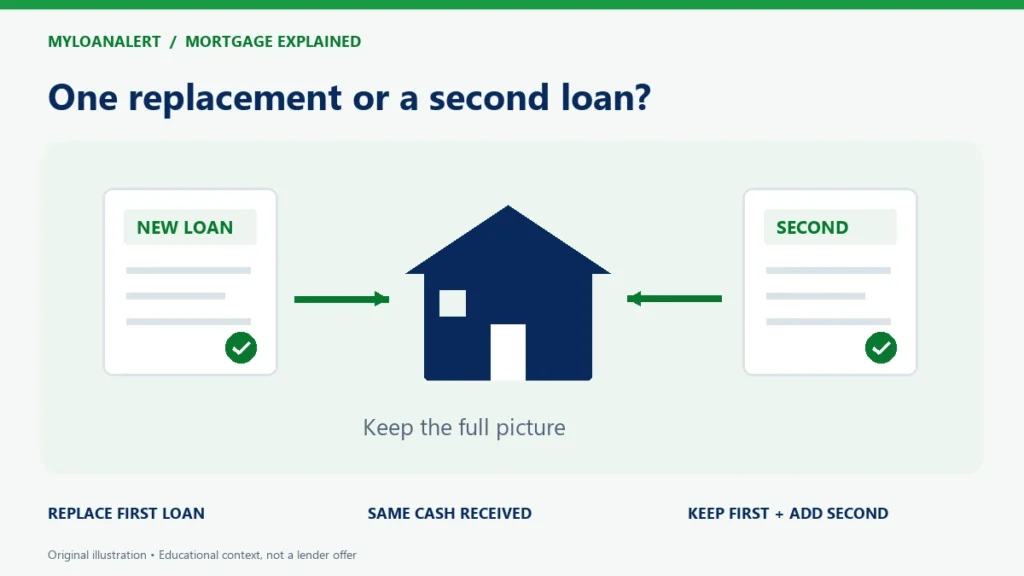
The short answerA cash-out refinance replaces your existing mortgage with a larger loan. A home-equity loan can leave the first mortgage in place and add a separate payment. Compare the same cash received, the combined payments, fees and borrowing cost—not just the rate on the new money.
You need money for a repair and have equity in your home. One lender offers a cash-out refinance. Another offers a second loan. It is tempting to compare their advertised rates and stop there. But one offer may change the cost of your entire existing mortgage. The other may change only the cost of the additional borrowing.
Decide how much cash you need
Start with the amount you want to receive after the transaction, rather than the maximum a lender says you can borrow. Keep that cash amount the same under both options.
Record fees and whether they are financed. A larger loan does not necessarily mean more usable cash if charges consume part of the proceeds.
Bring your first mortgage into the comparison
For the refinance, use the new loan’s full balance, rate and term. For the home-equity option, keep the current first mortgage’s balance, rate and remaining time, then add the second loan.
The rate on a smaller second loan can be higher while the combined borrowing cost is lower. The opposite can also happen. It depends on the numbers and how long you keep the loans.
Check the payment now and the debt later
Compare the combined monthly payment and the debt still owed after the same number of years. Extending repayment can make a payment look easier without making the borrowing cheaper.
Our calculator compares a cash-out refinance with a fixed home-equity loan. It is not a model of a variable-rate HELOC with a draw period and later repayment changes. Ask for the correct product terms.
Keep the home risk visible
Both options borrow against your home. If you cannot meet the loan obligations, the home may be at risk. Treat a lower payment as one measure, not permission to borrow more than your budget can support.
Before proceeding, ask about the net cash delivered, the combined required payment, the payoff date and possible prepayment charges. If funds will repay other debts, also read the debt-consolidation comparison.
A simple example
You owe $250,000 and need $30,000 in usable cash. A cash-out offer could reprice more than $280,000 once fees are included. A second-loan option leaves the $250,000 mortgage intact and prices the added borrowing separately. Compare both complete paths, not the headline rate on $30,000.
Illustrative assumptions, not current lender pricing or promised savings.
Questions people ask
Is a home-equity loan the same as a HELOC?
No. Product structures differ. This comparison is for a fixed home-equity installment loan; a credit line needs separate draw-period and repayment assumptions.
Should I always keep a low-rate first mortgage?
It is a valuable factor, but not the whole decision. Compare actual fees, combined payments, total costs and your ability to repay.
Try this with your numbers
Use your lender’s quote and your own assumptions. No signup is needed for the calculator.
Compare my two borrowing options →
See the free account · Compare more with Plus — $30 USD/year
New signup is coming soon. Existing accounts can save an offer or goal. Paid checkout is coming soon. Automatic monitoring and email alerts are not active yet.
Sources and further reading
Educational information and estimates only. Confirm loan terms and eligibility with your lender or servicer. MyLoanAlert does not originate or approve loans. Read our disclosures.