
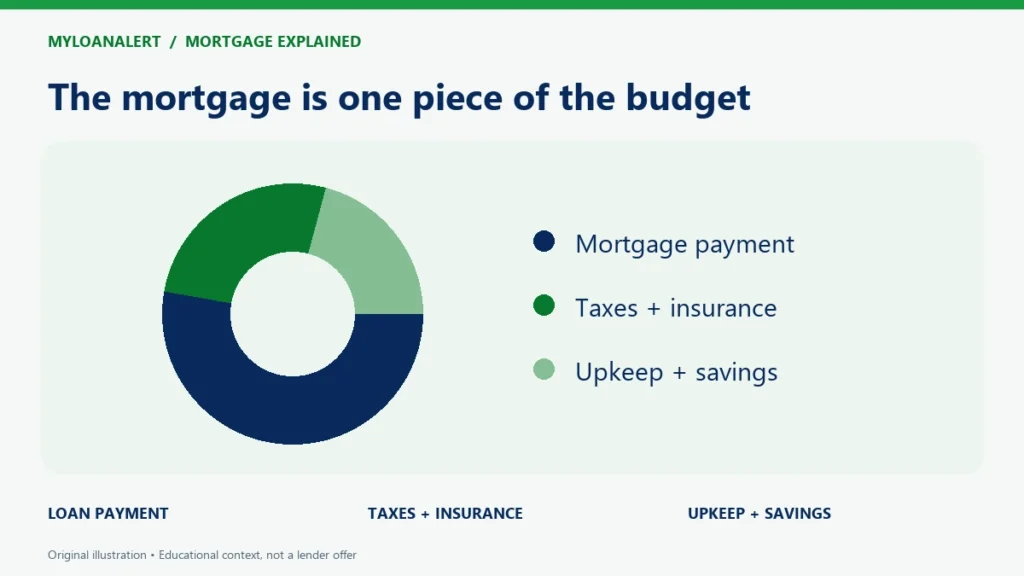
The short answerStart with the total housing cost your household can support, not just the largest loan a lender might approve. Include taxes, insurance, upkeep, other debts and savings, then check that you also have enough cash for closing and a reserve.
An approval letter can tell you what a lender is prepared to lend. It cannot tell you how comfortable that payment will feel on an ordinary Tuesday when groceries, childcare and a repair bill also need paying. A useful budget begins with the life you want to keep living after you get the keys.
Start with money that reaches your account
List dependable take-home income and the bills you already pay. Include debt payments and spending that is easy to forget, such as annual subscriptions, vehicle maintenance and gifts.
Allow for savings before assigning everything left over to housing. If income varies, try a quieter month as well as an average one.
Add the costs beyond principal and interest
Use local property tax and insurance estimates. Add mortgage insurance or association fees if applicable. Include maintenance and utilities that differ from your current situation.
Research the property you are actually considering. A generic percentage can be a starting assumption, but it may miss an older roof, a flood-insurance requirement or a substantial association fee.
Check your upfront cash separately
List the down payment, closing charges, moving expenses and immediate work on the home. Then calculate what money remains available afterward.
Do not count the same savings twice—once as a down payment and again as an emergency fund. A lower loan payment is less reassuring if the move leaves you with no accessible buffer.
Test the home price, not only the loan size
Enter a lender quote and the home’s estimated costs in the calculator. Try a less expensive property and compare the full budget. That can reveal whether the main pressure comes from the mortgage, local ownership expenses or the upfront cash requirement.
If you are not ready to purchase, use the buy-now-or-wait calculator to explore a savings plan. A budget estimate does not confirm loan eligibility or reserve requirements.
A simple example
Suppose $3,000 remains after your regular bills and planned savings. A $2,600 total housing estimate leaves $400 before unexpected expenses. Try a higher insurance estimate and a repair allowance. If the cushion disappears, lower the housing target rather than relying on the best-case month.
Illustrative assumptions, not current lender pricing or promised savings.
Questions people ask
Should I spend the maximum amount I am approved for?
Approval and comfort answer different questions. Use your household budget and priorities to choose the payment you want to carry.
Can the calculator predict my insurance and taxes?
No. Use property-specific estimates and update them as you learn more. These costs can change over time.
Try this with your numbers
Use your lender’s quote and your own assumptions. No signup is needed for the calculator.
See the free account · Compare more with Plus — $30 USD/year
New signup is coming soon. Existing accounts can save an offer or goal. Paid checkout is coming soon. Automatic monitoring and email alerts are not active yet.
Sources and further reading
Educational information and estimates only. Confirm loan terms and eligibility with your lender or servicer. MyLoanAlert does not originate or approve loans. Read our disclosures.