
MYLOANALERT · LEARN
Closing Costs & Documents Guides
Identify the fees, credits, prepaids and documents in an offer. Compare the complete cost before agreeing to the loan.
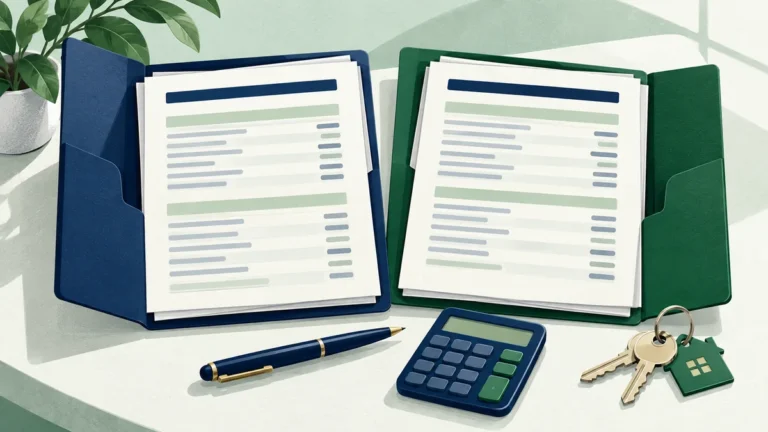
Which Mortgage Closing Costs Can You Negotiate?
Some lender charges can be discussed, and some third-party services can be shopped. Taxes and other required costs are different. Use the Loan Estimate to identify each category before asking for reductions.
Read the guide : Which Mortgage Closing Costs Can You Negotiate?Mortgage Origination Fees: What Are You Paying For?
Origination charges are costs associated with making the loan. Review their total, what each charge covers and whether discount points are included. A zero origination-fee label does not prove a cheaper mortgage.
Read the guide : Mortgage Origination Fees: What Are You Paying For?Mortgage “Junk Fees”: How to Question Charges Without Guessing
An unfamiliar fee is a reason to ask for an explanation, not automatic proof of wrongdoing. Compare what the fee covers, the total lender price and the written offers.
Read the guide : Mortgage “Junk Fees”: How to Question Charges Without GuessingPrepaids, Escrow and Fees: Why Cash to Close Can Be Confusing
Cash to close is not the same as the lender’s fee total. It can include your down payment, prepaid costs, escrow funding and adjustments, with credits and prior payments subtracted.
Read the guide : Prepaids, Escrow and Fees: Why Cash to Close Can Be ConfusingShould You Add Refinance Closing Costs to Your Loan?
Financing fees can reduce the cash needed today, but it increases the debt you repay and usually adds interest. Compare cash-paid and financed-cost quotes over the same period.
Read the guide : Should You Add Refinance Closing Costs to Your Loan?Your Mortgage Fees Increased Before Closing. What Should You Check?
Some estimated costs can change, while other charges have limits and exceptions. Compare the revised disclosures, ask what changed and request the lender’s written explanation.
Read the guide : Your Mortgage Fees Increased Before Closing. What Should You Check?Mortgage Closing Documents: What to Read Before You Sign
Review the Closing Disclosure, note, mortgage or deed of trust, and applicable riders before signing. Ask for the documents early enough to understand the loan and resolve unexplained differences.
Read the guide : Mortgage Closing Documents: What to Read Before You SignMore guides and comparisons
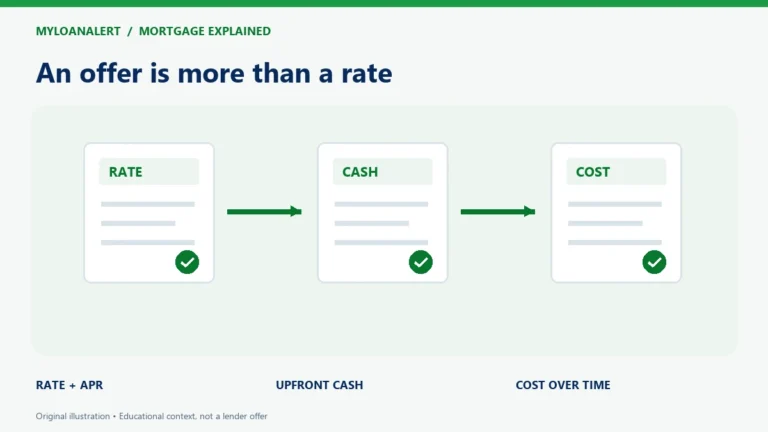
How to Compare Loan Estimates Without Getting Lost in the Numbers
Compare mortgage Loan Estimates using the rate, fees, credits, monthly payment and cash to close. Learn which questions to ask before choosing a lender.
Read the guide : How to Compare Loan Estimates Without Getting Lost in the Numbers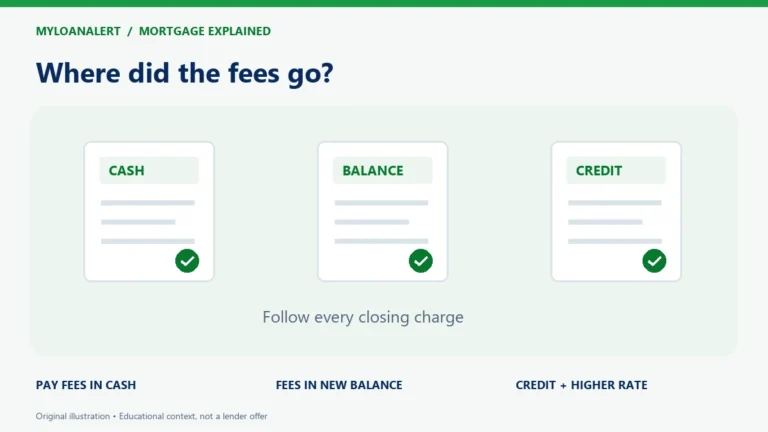
A No-Closing-Cost Refinance Still Has a Cost
A no-closing-cost refinance may use lender credits or add fees to your balance. Learn how to compare the payment, debt and costs with a cash-paid option.
Read the guide : A No-Closing-Cost Refinance Still Has a CostWhich Refinance Costs Belong in Your Comparison?
Separate real refinance fees from escrow deposits, then split the fees into amounts paid now and amounts added to the new loan.
Read the guide : Which Refinance Costs Belong in Your Comparison?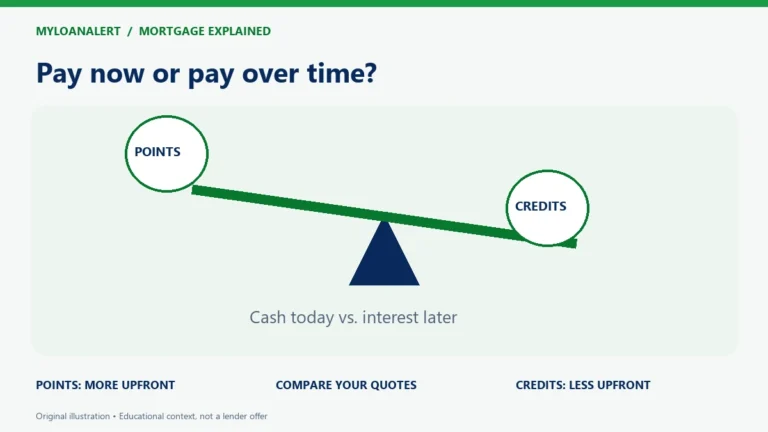
Mortgage Points or Lender Credits: What Are You Trading?
See how mortgage points and lender credits trade upfront costs for interest costs. Compare real quotes and test how long you expect to keep the loan.
Read the guide : Mortgage Points or Lender Credits: What Are You Trading?Bring your numbers to the next step
Use a calculator for an estimate or the offer guide for a written quote. Review the assumptions and confirm missing details with the lender.
Educational guides by MyLoanAlert. Source checks: October 12, 2026. Guides cite their sources and explain their limits. Program rules, rates and individual eligibility can change.