
MYLOANALERT · LEARN
Extra Payments & Payoff Guides
Compare payment timing, principal crediting and program fees. Find a sustainable extra-payment plan and confirm the servicer’s instructions.

Biweekly vs. Twice-Monthly Mortgage Payments: The Difference Matters
Every two weeks usually produces 26 half-payments per year; twice a month produces 24. The extra amount and when it is applied—not just the payment label—drive the payoff comparison.
Read the guide : Biweekly vs. Twice-Monthly Mortgage Payments: The Difference MattersMaking Extra Mortgage Payments Yourself: Check the Instructions First
An extra principal payment can reduce the balance and future interest, but you need to keep the required payment current and confirm how the servicer applies the extra money.
Read the guide : Making Extra Mortgage Payments Yourself: Check the Instructions FirstMore guides and comparisons
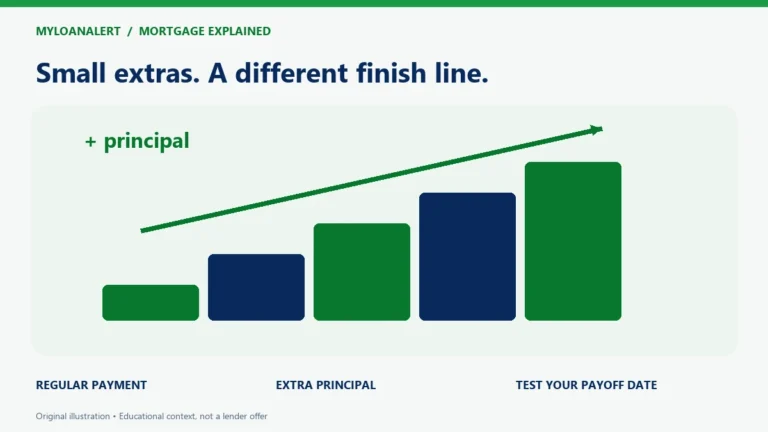
What Could an Extra Mortgage Payment Do for Your Payoff Date?
Test a monthly extra mortgage payment or lump sum, see how it changes interest and payoff time, and check how your servicer applies extra principal.
Read the guide : What Could an Extra Mortgage Payment Do for Your Payoff Date?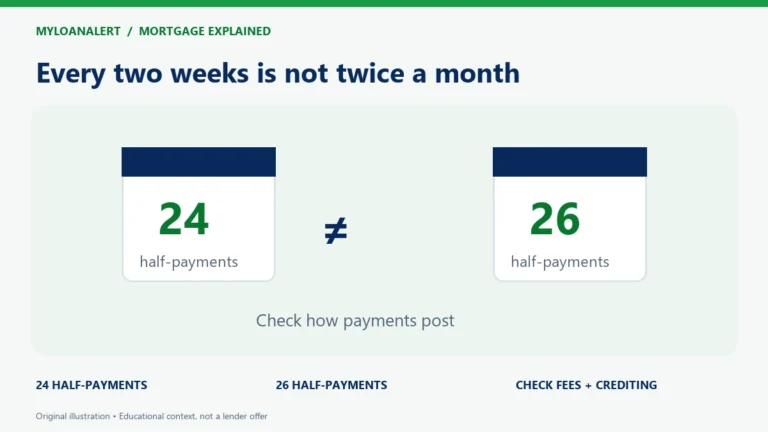
Biweekly Mortgage Payments: Check the Extra Payment and the Fees
Understand why biweekly mortgage plans can speed repayment, how fees and payment crediting affect results, and how to compare them with monthly extra principal.
Read the guide : Biweekly Mortgage Payments: Check the Extra Payment and the Fees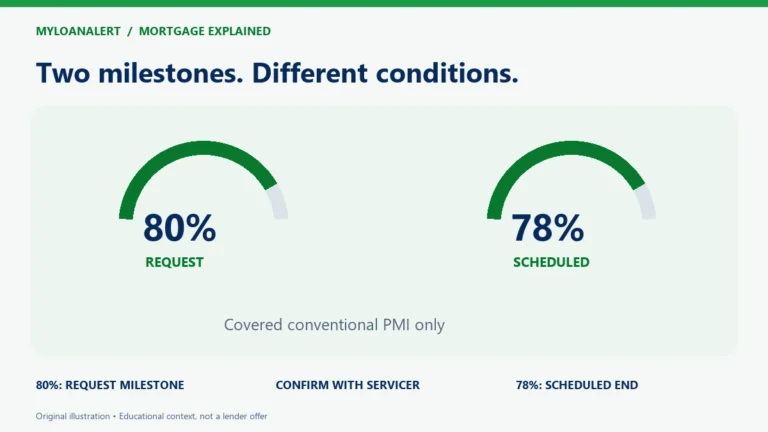
When Could PMI End? Check the Request Date and the Automatic Schedule
Learn the difference between requesting conventional PMI removal and automatic termination. Estimate timing, then confirm eligibility and conditions with your servicer.
Read the guide : When Could PMI End? Check the Request Date and the Automatic ScheduleBring your numbers to the next step
Use a calculator for an estimate or the offer guide for a written quote. Review the assumptions and confirm missing details with the lender.
Educational guides by MyLoanAlert. Source checks: October 12, 2026. Guides cite their sources and explain their limits. Program rules, rates and individual eligibility can change.